How To: Thrift vs. Consignment

As sustainable fashion becomes trendy, secondhand clothing is having a major moment! Rifling through clothes previously owned by others and finding the perfect thing at the perfect price is such a rush! Leaving the store with a bag of new goodies and knowing that you haven’t fed more money into fast fashion certainly helps as well.

A while back, I was bonding with an acquaintance over our love for thrift shopping. We decided that we must go together!

So she picked a couple of stores, and we headed out on our thrifting adventure. Boy was I surprised when we walked into a consignment boutique instead of a thrift store like I was expecting. When we’d talked, I thought we were on the same page! After attempting to explain the error to Oliver, I realized that a lot of people aren’t fully aware of the differences.

While for the most part, it’s not a big deal, there are some key differences which could cause a problem for your shopping or donation adventure!

THE BASICS

Thrift Stores:

  • get their clothes and other items as donations for free
  • often have cheaper pricing
  • quality of clothing is not guaranteed
  • styles are dependent on location/clientele
  • offer a wide variety of items in one location (clothes, furniture, home goods, etc.)

Thrifted pieces: the sweater and the jeans.
Basics, not particularly interesting brands, and purchased for under $20.

Consignment Shops:

  • pay compensation for their donations
  • usually have higher pricing (though still far below market for new items)
  • quality of clothing tends to be higher
  • styles dependent on curator and current market demands
  • often specialize in one type of item (clothes or furniture or home goods, etc.)

Consignment item: this lovely dress.
Quality fabric (100% silk), designer brand, purchased for $45.

It’s helpful to think of consignment shops as more like a museum and thrift stores as a gift shop: museums are curated quality items while gift shops can vary widely in price and quality. 

Thrift stores and consignment shops serve different purposes for different shoppers, so keeping in mind the key differences listed above can help you find exactly what you’re looking for. Some good guiding questions:

  • Are you looking to find a good price on a designer item?
  • Are you looking to save as much money as possible?
  • Are you expecting monetary compensation for in style pieces from brands?
  • Are you trying to get rid of as many things as you can?

When shopping, I tend to prefer consignment for fancier things like event dresses because they will have higher quality and often more modern or in style items.  I also look here for coats and shoes which I consider investment items – items in my wardrobe that I want to last a long time or survive a lot of wear and tear.

On the other hand, I tend to prefer the thrift store for general clothing (sweaters, t-shirts, jeans) as they will have a larger selection that isn’t limited by modernity, trend, or brand. I also find that thrift stores are better for costumes – you’ll be able to see a much wider variety of things and won’t spend as much money on something you will likely only wear once.

That being said – you can’t go wrong with secondhand clothing – especially gifts!

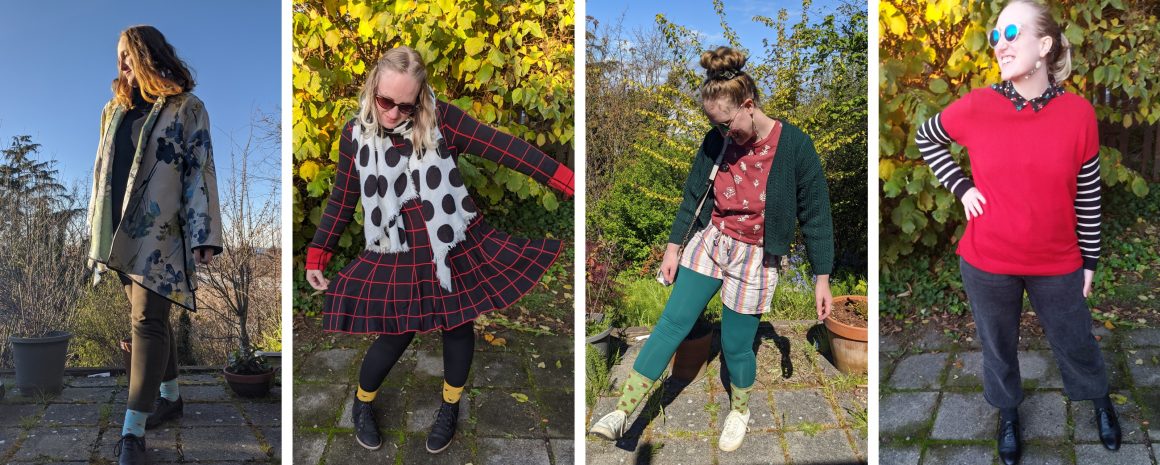
Coat: gift from a friend! (though this would have likely been consignment if I’d purchased it)
Pants: thrifted for $5
Joy of Looking Fabulous: priceless 🙂

Have you ever gotten mixed up in the wrong type of store? Do you have any other questions or information about the differences between thrift and consignment? Comment below!
How To: Shop on A Budget

“Oliverrrrr” I call out, laying on the bed and looking at our closet. He comes to the bedroom.

“I hate all my clothessss” I cry, with a dramatic flourish of my arm toward the closet and dresser.

“What about that colorful striped sweater you love?” He asks, confused.

“Yes, but I already wore it this week, and I wear it all the time, and I hate everything else.”

Me, literally all the time.

This happens to me roughly every three months. It’s strongest at the end of winter, when I am so very tired of being cold all the time, but definitely occurs in varying doses throughout the year. Usually a conversation like the one above will happen, and then Oliver will kindly remind me that we are saving for XXX. This year it’s our wedding and honeymoon. In the past it was some other big exciting vacation, or moving to a new place, or to buy furniture for our apartment, or many other very logical things people save for.

This often means that my budget for buying new clothes is roughly $100 (and often much less). On top of that, I’ve recently set myself with a goal of upgrading my wardrobe from cheap, fast fashion pieces to quality garments that will last. This can make shopping super difficult. Here are my tips and tricks that help me keep my closet and style fresh without breaking the bank.

—–> Step One: Thrift What You Can

I will eventually write a longer post on how to shop at thrift stores, because these can be essential when the fashion duldrums set in. While $100 might not last very long in the mall (or will get lost in fast fashion pieces that will fall apart the minute you wash them) it can buy you several quality items at the thrift store. I find this especially useful when I’m looking for pants because I’m not relegated to a few different brands or styles – and pants can be so expensive in up front cost to get something good. Plus, if you do end up with some fast fashion pieces, they cost you $3 instead of $25 and you’ll feel a lot better when they inevitably fail you.

—–> Step Two: Shop in the Off-Season

You know when swimsuits are super cheap?? August. This is a really great strategy for splurge items, where you know exactly what you’re looking for, or seasonal pieces. Give your heavy coat another season, and then in March start scanning through end of season sales. Most brands and stores start transitioning into the next season about one-two months early, so keep this in mind. It’s also a useful trick when you want to get something in a certain brand but don’t have the money to do a full buy in. BE WARNED — sales can be a huge pitfall. This isn’t a ‘trick’ if you’re scanning every sale for something you might like. Be very focused on what you’re looking for, and intentional about when you’re shopping, or you’ll spend money you don’t have on things you don’t need and be unable to afford garments you really do need to fill out your wardrobe.

—–> Step Three: Fast Fashion for Trendy Items

If you’re looking for something that’s super trendy now, but might not be wearable later, don’t splurge a bunch of money on it, especially if it’s out of your normal style or comfort zone. For these items, say trendy purses/bags, funky unusual shoes, or trendy patterned clothing, you will be fine finding something at a fast fashion store (Target, Forever21, H&M, etc.). The smaller price tag lets you try a trend without feeling like you wasted your money if you hate it, and if you end up loving it, you can always upgrade later when your budget has had time to grow.

—–> Step Four: Don’t Be Afraid to Online Window Shop

… That’s right, online! What I do is while mindlessly scrolling through some website that caught my eye, I’ll save links to items that I like in a specific folder. Then come present-giving events, I have lots of different links I can send to people of things I already know I want but can’t necessarily afford to buy for myself. These links also give me a good idea of what I am really hunting right now. Say that all of my last four links were a specific style of hoodie, then I know that is an item I really want to search for. Also, a lot of sites have an option to email you alerts when they go on sale or come back in stock. For an item you really know you want, this is a great option. Finally, this step helps you slow down on impulse purchases. If you get in the habit of saving a link instead of clicking purchase, you’ll end up saving money too. Give it a week and if you still can’t get it off your mind, then see if you have enough money to buy it.

—–> Step Five: Watch Impulse Buys

While this sounds more like an entry on “10 Ways to Cut Coffee and Save!!!” I promise this is a real tip for finding clothes on a budget. Learn to recognize your impulse buys and stop them before they happen. I find that trying items on helps a lot. As soon as I start making excuses for an item – “Oh, it doesn’t quite fit on my waist but it’s something that I’ve been looking for!” – I know that I really should put it back. I also know that if I texted an item to a friend, it’s likely because I am on the fence. If you’re on a tight budget – on the fence means no, every time. You don’t have the money to waste on maybe. Learn what your triggers and habits are: do you always fall for fall colors? Do you get sentimental around hats? Do you have a weak spot for sale prices, even if they aren’t that good? Once you’ve identified problem behaviors and thoughts, you can take measures against them and keep your bank account ready for the items you actually want.

—–> Step Six: Have Patience & Save Up for Important Pieces

I will write a larger post going into more depth on what items it’s worth splurging on and what items you can afford to buy cheaper. But here’s my golden rule: if it’s something really central to your style or that brings you a lot of joy when you wear it, then it’s worth the patience to save up some money and find the right one in a good, quality brand. Whether this be shoes or coats or sweaters or jewelry or jeans… if it’s important to you then it will be worth the wait, and the larger price tag. I have found throughout my life that the items I splurge on, especially when money is tight, end up being items that I wear every single day.

Any of these tips helped you? Feel like you’ve tried all these and are still stuck? Have any tips of your own? Feel free to comment below!